
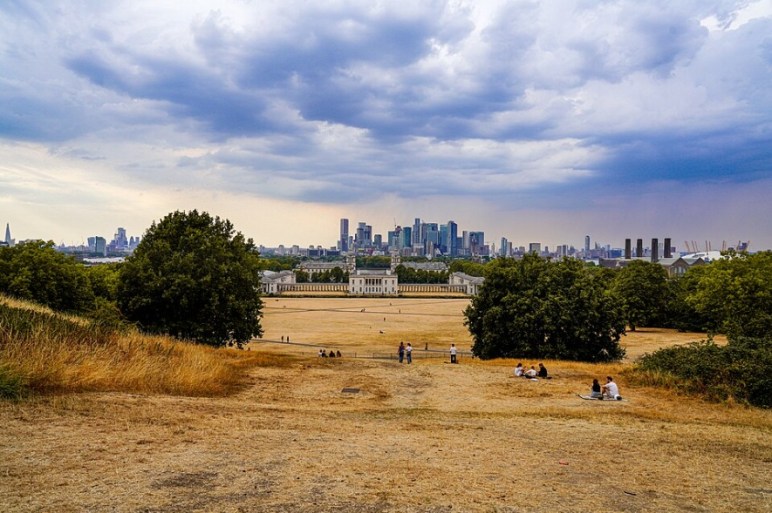
This summer is a hot one. It’s on track to become the hottest summer on record. And drought has been declared for more than two-thirds of England and all of Wales.
In many places, the grass is brown, the ground is hard, and farmers are having to harvest crops early or give up on them completely. Is this the new normal?
Here we look at the implications of hotter summers (on average) for smallholders and off-gridders in England and Wales.
WATER MANAGEMENT
- Winter water storage is crucial to have enough water for spring and summer droughts. This might mean shifting from IBC tanks to large-scale earthen ponds, swales, or deep reservoirs. Or sinking a borehole.
- Earthworks and water networks need to be designed to slow, spread and sink heavy winter rains deep into the water table. Establishing new water bodies and re-wetting the landscape can also help.
- Greywater recycling and closed-loop systems are becoming more essential to re-use domestic shower and washing water onto orchards or perennial beds.
DIET AND CULTIVATION
- New ‘exotic’ staples like chickpeas, lentils, sunflowers, grain maize, and soy need to be embraced. Traditional UK staple crops like leafy greens, carrots, and brassicas suffer severe heat stress and yield drops during 35°C+ spikes.
- Mediterranean agroforestry also needs embracing, such as growing sweet chestnuts, walnuts, figs, pomegranates, and apricots. Traditional apple orchards are facing climate stress.
- Mulching and soil health becomes more important, including regular sheet mulching, ‘chop-and-drop’ systems, and heavy green cover crops. Otherwise, bare soil will bake, leading to organic matter loss and compaction.
- Livestock adaptation will be needed, as some breeds suffer heat stress. The focus will be on hardier, heat-tolerant, or shedding breeds, and integrating silvopasture (grazing animals directly inside woodlands for shade).
COOLER HOMES / LIVING SPACES
- Thermal mass counter-measures are highly favourable, such as cob, rammed earth, and earth-sheltered buildings, to keep interiors cool during the day. Buildings also need careful night-time purge ventilation to release absorbed heat.
- External shading and shutters, often seen in more southern European climates, will be increasingly needed in Britain. Deep roof overhangs, and deciduous vine pergolas on southern walls, can also help.
- Microclimate design is crucial – positioning new dwellings and designing the landscape around homes, with planting of deciduous copses on the south-southeast boundaries for shade, while allowing the winter sun to pass through.
- Adjustments for van-lifers is a full subject in its own right. Combining strategic geographic movement (where practical), smart thermal management, and careful water conservation practices.
WILDFIRES AND BIODSECURITY
- Defensible space becomes even more important, trying not to have highly flammable gorse or conifers near homes, instead having high-moisture-content deciduous trees, or green firebreaks.
- Pest and disease vectors need keeping an eye on. New agricultural pests and fungal diseases may threaten trees and crops systems alike.
All in all, lots to think about and ponder on!
And for more immediate advice on dealing with the heat, try this page…
Tips to stay cool in hot weather – Centre for Sustainable Energy
FEATURED IMAGE: Heatwave in Greenwich Park, London (2022) – image by Alisdare Hickson at Wikimedia Commons
This post is for informational purposes only. See our Disclaimer and Terms for more.


.jpg)