
What are permitted development rights?
“Permitted development rights are a national grant of planning permission which allow certain building works and changes of use to be carried out without having to make a planning application. Permitted development rights are subject to conditions and limitations to control impacts and to protect local amenity”.
Source: Gov.uk
Permitted development (PD) rights allow certain development, for example minor developments or change of use, to take place without obtaining express planning permission. It’s important to note that they are subject to national conditions and limitations (for example limits on height, size or location etc).
In some cases, PD rights are subject to prior approval. This means that you have to seek approval from the local planning authority that specified elements of the development are acceptable before work can commence.
PD rights are set out in the General Permitted Development Order, as amended. As the English and Welsh planning systems have diverged, different PD rights have been established.
PD rights in England
Of the many classes of PD rights in England, we’ve highlighted five below…
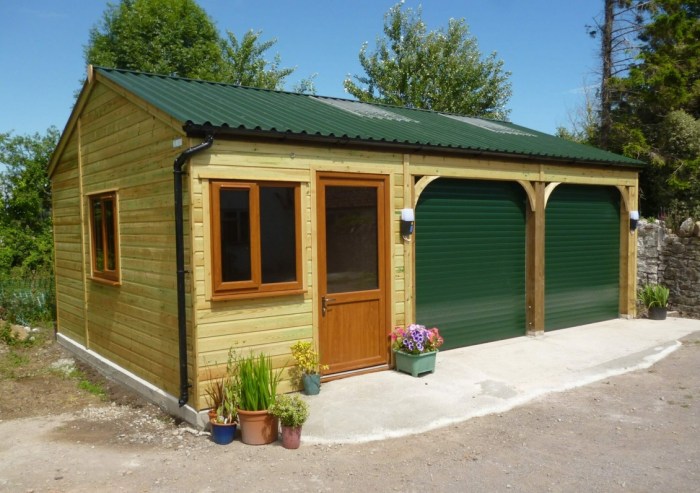
- Householder development – Under Part 1 (development within the curtilage of a dwellinghouse), it’s possible to carry out various changes to your home, including extensions and alterations, and to erect outbuildings in the curtilage* of a house. The national conditions and limitations may include, for example, the height or length of an extension, or the size or location of a new outbuilding.
- Changes of use – Under Part 3, there is scope to change the use of certain buildings to another use, without needing planning permission. One of the most well-known categories is “Class Q”, which allows the conversion of agricultural buildings to create up to five (or ten since May 2024) residential dwellings, per agricultural unit. There is also scope for building operations reasonably necessary to facilitate the new residential units, and adding extensions (the latter again since May 2024). All subject to various rules and exclusions, and the need to obtain prior approval for certain matters. There are many online resources that go through intricacies of Class Q. As they say, the devil is in the detail, so research (and professional advice) is recommended.
- The “28-day rule” – Under Part 4 (temporary buildings and uses), it is possible to use land for any purposes for not more than 28 days in total per calendar year; and to have moveable structures associated with the temporary use. The national conditions and limitations restrict this right, including in relation to holding markets, motor racing and caravan sites. Also, it does not apply within the curtilage* of a building.
- Agriculture and forestry – Under Part 6, there are PD rights for the erection or alteration of a building, for excavation or engineering operations, and for various other works. The rights are more generous for agricultural units over 5 hectares in size. The rights only apply where the development is reasonably necessary for the purposes of agriculture within the agricultural unit. In some circumstances, the prior approval of details from the local planning authority is required. There are separate rights for forestry developments (Class E of Part 6).
PD rights in Wales
Of the many classes of PD rights in Wales, we’ve highlighted four below:
- Householder development – Under PD rights in Wales, it’s possible to carry out various changes to your home, including extensions and alterations, and to erect outbuildings in the curtilage* of a house. The national conditions and limitations may include, for example, the height or length of an extension, or the size or location of a new outbuilding.
- Commercial, educational & health buildings – There is a separate guidance document on PD rights for a range of commercial, educational and health buildings. However, there is not the same scope for change of use of buildings (for example to residential) under a prior approval regime, as there is now in England.
- The “28-day rule” – Similar to in England, this allows land for any purposes for not more than 28 days in total per calendar year; and to have moveable structures associated with the temporary use. The national conditions and limitations restrict this right, including in relation to holding markets, motor racing and caravan sites. Also, it does not apply within the curtilage* of a building. As an example, see how the 28-day rule is applied to camping on Pembrokeshire Coast.
- Agriculture and forestry – According to Technical Advice Note 6: “Permitted development rights are granted for a range of agricultural buildings and operations. Rights to erect, extend or alter such buildings, and for excavations and engineering operations, are available to agricultural units of at least 5 hectares under Class A of GPDO. More limited rights, including extensions and alterations adding not more than 10% to the content of the original building, are available to smaller units of not less than 0.4 hectare under Class B of GPDO (for details see Annex A)”. There are similar PD rights for forestry; see TAN6 using the link below.
Things to bear in mind
It’s important to read and understand the whole PD right, including the conditions and limitations. For example, many of the PD “rights” are taken away in certain circumstances (such as if a building is listed) or in certain locations (e.g. within a National Park, National Landscape, Conservation Area, or SSSI). There may be other limitations based on size of development, floor space, or timescales.
Also to bear in mind: PD rights may have been withdrawn by the local planning authority through the serving of an Article 4 direction. This most commonly occurs in Conservation Areas. Sometimes the local authority’s online mapping shows which land is covered by Article 4 directions.
Finally, the PD rights have been regularly amended over the years, so it’s useful to check that you’re using the most recent version.
Key terms
Dwelling house (or dwelling) – A self-contained building or part of a building used as a residential accommodation, and usually housing a single household. A dwelling may be a house, bungalow, flat, maisonette or converted farm building (although in some legislation flats are treated differently).
Curtilage – The land immediately surrounding and closely associated with a property. It usually refers to a residential curtilage, which is the immediate domestic garden ground associated with a dwelling, but it can be used to refer to land associated with other buildings.
Videos
Two videos related to PD rights in England…
Relevant links
ENGLAND
UK Government – What are permitted development rights?
UK Government – PD rights for householders: technical guidance
Planning Portal – Permitted development rights
Planning Portal – Home improvement projects
WALES
Guidance on permitted development rights for householders
Guidance on permitted development rights for buildings
Technical Advice Note 6 – Planning for Sustainable Rural Communities
Planning Portal permitted development guidance (Wales)
Related pages
This page is for informational purposes only and should not be taken as advice or recommendation. It may not be comprehensive or up-to-date, and may omit important regulations, policies or criteria. You should do your own research and seek professional advice as appropriate before deciding your way forward. See website disclaimer / terms of use.

 Wildhousing