What are land-based livelihoods?
Land-based livelihoods involve the cultivation or husbandry of biological resources, such as crops, vegetables, fruits, animals, trees, etc, for direct household consumption or to create an income. So it can include small farmers, growers and foresters.
Examples of land-based livelihoods
The list below provides examples of land-based income-earning activities, compiled from web sources including One Planet Development management plans in Wales.
Growing food
- Growing vegetables, fruits and nuts – including for veg boxes, and including specific focus or ‘cash crops’ e.g. growing salad leaves, edible flowers, rhubarb, pumpkins, squash, asparagus, garlic, hazelnuts, blueberries, strawberries, blackcurrants, apples, etc
- Growing mushrooms
- Producing value-added foods e.g. fruit juice, wine, cider, cider-vinegar, oat milk, fermented vegetables, jams and preserves
Animal related
- Poultry keeping, for eggs or meat (chickens, ducks, geese, turkeys)
- Goats or cows, for milk or meat
- Sheep, for wood or meat
- Pigs, for meat
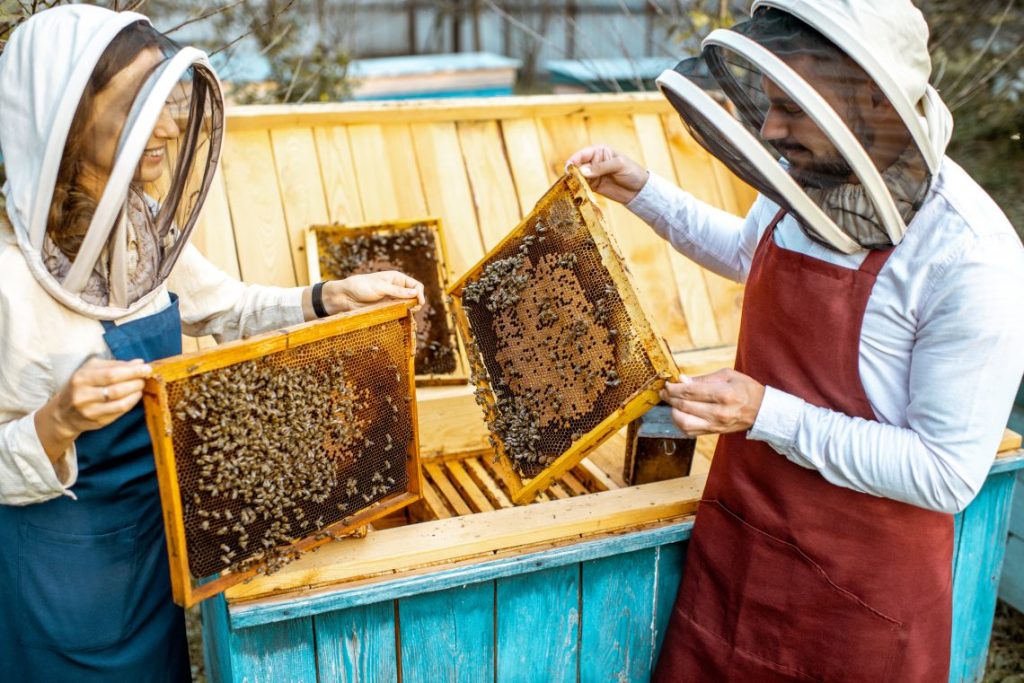
- Beekeeping, for honey
- Producing live bees
- Rearing poultry for sale
- Rearing rare breed livestock
- Producing value-added items e.g. cheese, beeswax candles, woolcraft
Forestry related
- Growing trees to produce construction timber
- Biomass production, e.g. coppice woodland, including logs for firewood
- Growing young trees and plants for sale, e.g. nursery trees, willows for living willow sculptures
- Producing value-added items e.g. willow baskets, willow charcoal pencils, musical instruments, greenwood crafts, bespoke furniture, cleft gates, hurdles and fencing, charcoal, biochar
Other natural products
- Growing grass to produce hay
- Growing grains for animal feed
- Growing flowers to produce cut flowers
- Growing herbs or other plants for medicinal purposes
- Producing natural skin care products with botanical extracts
- Producing seeds or seedlings for sale
- Producing other value-added items e.g. artwork, sculptures, pottery
Other land-based income
- Running educational courses e.g. hedge-laying, green woodworking, timber-framing, mushroom growing, basket-making, shamanic drum making, foraging, permaculture design
- Offering educational activities e.g. Forest School sessions
- Offering land-based natural therapies
- Visitor accommodation e.g. camping, B&B
Note: for One Planet Development purposes in Wales, education and consultancy work “can be counted but must be subsidiary to the main land-based business”. Also, it’s not possible to count accommodation (camping or B&B) towards the land-based income. Source: OPD Council.
Related pages
One Planet Development (Cymru)
This page is for informational purposes only and should not be taken as advice or recommendation. It may not be comprehensive or up-to-date, and may omit important regulations, policies or criteria. You should do your own research and seek professional advice as appropriate before deciding your way forward. See website disclaimer / terms of use.

 Wildhousing