
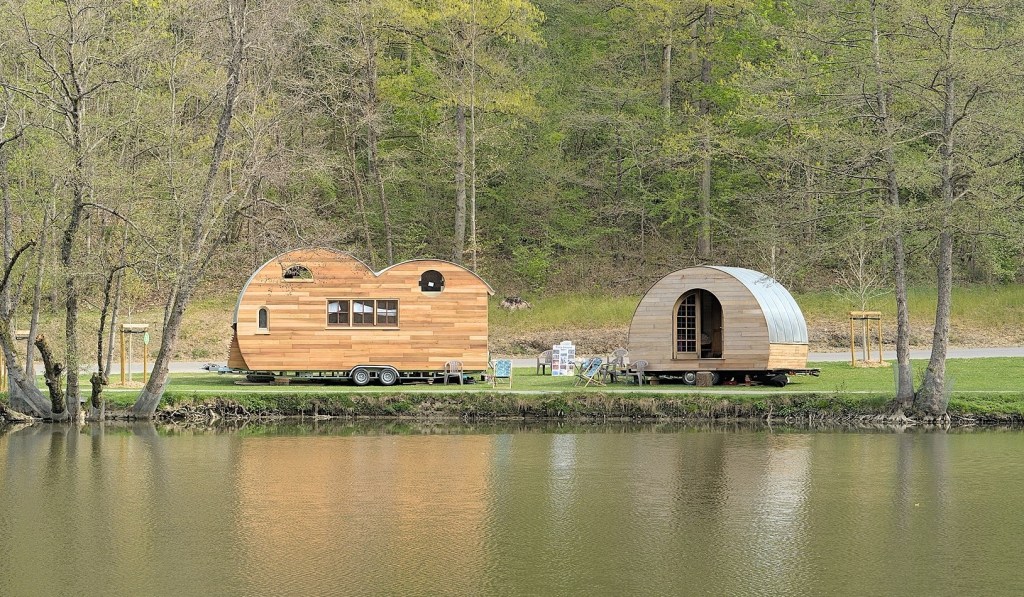
What is a caravan?
There is a legal definition of a caravan in the UK, which has been established through different pieces of legislation over time.
A caravan can include all of the following…
- mobile homes (twin unit caravans assembled from two parts)
- static caravans (single unit)
- touring caravans
- motorhomes
The legal definition of a caravan…
“Any structure designed or adapted for human habitation which is capable of being moved from one place to another (whether being towed, or by being transported on a motor vehicle or trailer) and any motor vehicle so designed or adapted but does not include (a) any railway rolling stock which is for the time being on rails forming part of a system, or (b) any tent”
And for twin-unit caravans…
“A structure designed or adapted for human habitation which:
- Is composed of not more than two sections separately constructed and designed to be assembled on a site by means of bolts, clamps and other devices; and
- Is, when assembled, physically capable of being moved by road from one place to another (whether being towed, or by being transported on a motor vehicle or trailer), shall not be treated as not being (or have been) a caravan within the means of Part 1 of the Caravan Sites Control of Development Act 1960 by reason only that it cannot lawfully be moved on a highway when assembled”.
And the size requirements…
- Length (exclusive of any drawbar) 20 metres (65.6ft)
- Width: 6.8 metres (22.3ft)
- Overall height (measured internally from the floor at the lowest level to the ceiling at the highest level) 3.05 metres (10ft)
Please note: the c. 3 metre internal height limit for a caravan means that a ‘mezzanine’ floor wouldn’t be possible, but a raised sleeping platform or bunk beds might be.
Does a caravan need planning permission?
A simple question, but the answer is a bit long winded!
Siting a caravan on land and living in it may well need planning permission. However, that does not mean you will need to apply for planning permission in every situation. There are certain circumstances in which you do not need to seek permission from the local planning authority…
> Planning permission already in place
In some locations planning permission is already in place, so an existing caravan could be replaced by a new unit meeting the definition of a caravan. The main example is a park homes site, of which there are many, although some have restrictions (for example, some sites are age-limited). There are also many holiday caravan sites (which often have restrictions on duration of stay).
Occasionally, land comes up for sale with planning permission already in place for the siting of a single caravan (again, check the permission to see if any conditions apply). Or land can come up for sale with a certificate of lawful use in place which allows the siting of a caravan.
> Incidental use in residential curtilage
Where a caravan is sited within the curtilage* of a dwellinghouse (e.g. your back garden) and is used for purposes incidental to the enjoyment of the dwelling, planning permission is not needed. Incidental uses could include a family member sleeping in the caravan whilst taking their meals in the house. However, use of the caravan as a separate dwelling would need planning permission.
> Social or recreational use by exempted organisations
Some organisations hold a caravan exemption certificate, so their members can stay on their sites, or on site approved by them, or on land where they may hold meetings or rallies. As an example the Caravan and Motorhome Club has over 2200 Certified Locations, which are privately owned sites where up to 5 caravans or motorhomes can be sited on a temporary basis.
> Other ‘permitted development’ exemptions
It is permitted development (i.e. no planning permission needed) for a ‘caravan site’ to be created in certain other circumstances, as established through legal provisions in England and Wales. No caravan site licence is needed either. This is where caravans are being used…
- for temporary building/engineering workers or seasonal agricultural or forestry workers or certified travelling showmen;
- for not more than 2 nights (as long as the caravan(s) has not been present for more than 28 days during the previous year), or;
- for up to 3 caravans on a plot of 5 acres or more for no more than 28 days a year;
- on sites owned by a local authority.
Things to bear in mind
Please note: (1): whilst the ‘permitted development’ exemptions apply on relevant land, it is possible for the local planning authority to arrange for the exemptions to be withdrawn.
Please note (2): any structure falling outside the portability and size criteria for a caravan, or having a sufficient degree of permanence due to adaptations to physically attach it to the ground or to connect it to main services, may no longer be viewed as a caravan, but as ‘operational development’ requiring planning permission. As an example, lodge-type park homes with plumbing connections, brick ‘skirts’, decking, steps, etc may involve operational development requiring planning permission.
What if the caravan is sited on agricultural land?
As indicated above, there are permitted development rights (i.e. no need for planning permission) for temporary siting of caravans on agricultural land, to provide accommodation for seasonal farm workers.
Also, the temporary siting of a caravan on agricultural land may be seen as incidental to the use of the land for agriculture, if for example it was being used as a day shelter for farm workers.
However, if a caravan on agricultural land was occupied for an ongoing / permanent basis, it is likely to require planning permission from the local planning authority.
How do I obtain planning permission?
Where planning permission is required for the siting of a caravan, it is worth doing some research, and potentially seeking advice from a planning consultant, or directly from the local planning authority. There is also advice available on the Planning Portal (England | Wales), from where planning applications can be submitted.
Some local planning authorities may be willing to grant planning permission for new caravans in certain circumstances. For example, they may support a new holiday caravan park or gypsy or traveller site, subject to certain criteria. Temporarily they may grant permission for a caravan on land where a new rural enterprise is being established, as part of proposal for a rural worker’s dwelling, or for temporary occupation whilst a replacement dwelling is being self-built.
However, on the whole, local planning authorities aren’t keen on granting planning permission for caravans in other circumstances. This is often because caravans are not seen as visually appealing forms of accommodation. Obviously some caravans (such as timber-clad-tiny-homes-on-wheels) can be visually appealing. However, if planning permission is successfully obtained for a caravan or a caravan site, usually any structure meeting the definition of a caravan could be sited there.
Do I need building regulations approval?
Building regulations cover the construction and extension of buildings, so a structure that meets the legal definition of a caravan is exempt from building regulations.
There are various British Standards for caravans to adhere to. At the time of writing, our understanding is that these are BS EN 1646 for motor-caravans (which also need to be road legal), BS EN 1647 for static holiday caravans and single units, and BS 3632 for mobile homes (twin-unit caravans).
Do I need a caravan site licence?
The Caravan Sites and Control of Development Act 1960 requires (in summary) that a caravan site licence should be obtained for use of land for a caravan site – unless certain exceptions apply, including those mentioned under ‘permitted development’ exemptions above.
For more info, see gov.uk/caravan site licence or check with your local authority.
Any other regulations?
For park homes on protected sites in England or Wales, there are various legal provisions that buyers and sellers need to bear in mind. See the guidance for England or Wales.
Key terms
*Curtilage – The land immediately surrounding and closely associated with a property. It usually refers to a residential curtilage, which is the immediate domestic garden ground associated with a dwellinghouse, but it can be used to refer to land associated with other buildings.
Related pages
Ideas for projects & communities
This page provides general information only. It is not professional advice and should not be relied upon as such. The content may be incomplete, out of date, or omit important regulations, policies, or criteria. You should verify any information independently and seek appropriate professional advice before taking or refraining from any action. See website disclaimer / terms of use.

 Wildhousing