
This blogpost looks at One Planet Development (OPD) style planning policies in South West England, a few years after they were first introduced.
How many planning applications have been submitted, and how many have been approved?
We start in Dartmoor and Cornwall, which have both introduced low impact development policies.
There’s a quick mention of a couple of councils considering introducing such policies.
And a return to where it all started – in Wales.
Dartmoor
In December 2021, Dartmoor national park authority introduced a planning policy on low impact residential development. You can read about how it was introduced in this blogpost, and more about the policy here: Low Impact Residential Development (Dartmoor).
So how has it been going? Unfortunately, there don’t seem to have been many planning applications as yet. In our search for “low impact” on the Dartmoor NPA planning portal, it only returned one planning application – which was refused. Potentially there have been other applications, without “low impact” in their description. However, perhaps the plethora of criteria and the national park status have put off would-be applicants. Hopefully other applications in future will have more success.
Cornwall
Following in the footsteps of Dartmoor, Cornwall Council introduced its policy AL1 – Regenerative and Low Impact Development in February 2023. You can read about how it was introduced in this blogpost, and more about the policy here: AL1: Regenerative & Low Impact Development (Cornwall).
The policy got off to a strong start. A dwelling and land-based business that had been served an enforcement notice were granted planning permission on appeal the day after the policy was introduced. The policy appears to have arrived just in time in that case. Since then, the council has published guidance associated with the policy. And there has been some planning activity, but only a limited number of permissions granted.
Purely based on using relevant search terms in the Cornwall planning portal, we’ve unearthed two other planning permissions granted under policy AL1. One was near Saltash and one was near Falmouth. In addition, there are three cases awaiting a decision, and another one at appeal. Overall, it’s a modest level of activity, but that’s to be expected in the early years of a new policy such as this. As more consents are granted over time, there will be more real-life examples of the policy in practice.
Forest of Dean
Forest of Dean District Council is considering introducing a planning policy similar to One Planet Development.
In 2024, the council consulted on its emerging local plan including a draft policy on “new housing (small groups or single dwellings)”. In the current consultation, this has become draft policy RLP.15, which requires applicants wishing to live on site to “generate their food, water and energy needs from living off the land”. There are six criteria that applicants must comply with.
The emerging local plan is due to be submitted for public examination later in the year. Assuming all goes well and their timescales hold, the local plan is due to be adopted in Spring 2027. The Forest of Dean would then be the third local planning authority in the South West to introduce an OPD-style planning policy.
Bath & North East Somerset
B&NES Council is also considering an OPD-style planning policy, citing the policy introduced in Cornwall a precedent.
In Autumn 2025, the council consulted on its local plan options, including a new policy called “Low Impact Farming”. It stated… “LIF developments are typically small-scale, land-based enterprises that integrate food production, biodiversity enhancement, renewable energy, and low-carbon living”.
It’s still early days, as the council has another consultation in summer 2026, the plan then goes to public examination, before being adopted sometime in 2027. Also to bear in mind, large parts of the district lie in the Green Belt, where very special circumstances need to be demonstrated. (This might limit the scope for low impact development in B&NES area).
Wales
And finally, back to Wales – where the One Planet Development planning policy was originally introduced back in 2010. We’ve produced a short document comparing the OPD policy with the more established Rural Enterprise Dwelling (RED) policy.
You can check it out here: Policy comparison
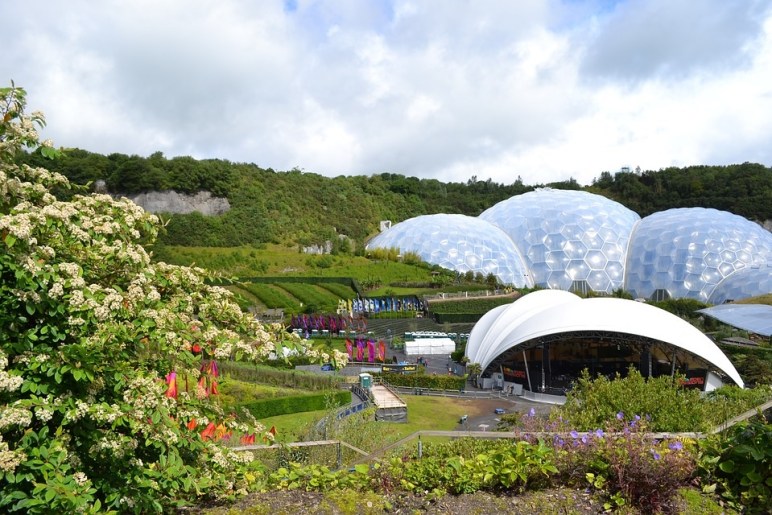
FEATURED IMAGE: The Eden Project in Cornwall – not an OPD project, but worth a visit.
This post is for informational purposes only. See our Disclaimer and Terms for more.

 Wildhousing