We welcome in 2025 with a new concept: “wild communities”.
This sounds very relevant for this website (Wild Housing) with its focus on natural homes, intentional communities and land-based livelihoods. But it’s not our idea.
It comes from an article by Chris Smaje in The Land Magazine.
Who is Chris and what’s the article about?
Chris Smaje is a former social scientist, who in 2007 became a small-scale commercial veg grower in South West England. He is the author of A Small Farm Future and continues to write about designing low-impact local food systems.
The article is essentially a book review of The Lie of the Land by Guy Shrubsole, but Chris does a lot of heavy lifting in what is quite a long article, bringing in ideas (and opinions) from lots of other books and authors – including his own.
Where do wild communities come in?
Chris lumps together the rewilders and ‘re-rainforesters’, as well as the ‘land-sparers’ – those advocating for food production and other human activities being concentrated in a small area, leaving the rest for nature. The concern raised is that this approach relies upon and perpetuates intensive and industrial forms of agriculture in order to produce our food, so we can have space for nature.
Chris makes the case for land-sharing: the idea that we should produce food in nature-friendly ways that enable us to coexist with wildlife. And for the idea of agrarian or livelihood communities, of small-scale farmers, that are local and resilient in their focus.
What does a wild community look like?
Based on Chris’s article, a wild community is a group of people claiming long-term livelihoods directly from the land at a particular place. A community not reliant on “tapping the flow of wider abstract capital” or on support from the government of the day.
And based on his book, there appear to be two main types of wild community (or ‘rural utopias’ to use the phrase from A Small Farm Future). They are…
- Traditional rural livelihood communities, such as upland (sheep) farming in Wales. These farming communities are struggling economically, and may be questionable ecologically, but continue a cultural tradition of people living and working on the land.
- Modern “back-to-the-land experimenters and rural intentional communities”. Chris wonders whether “such experiments will remain a fringe activity or presage a wider turn towards rural sustainability in a post-capitalist future”.
To view the full article, see: Wild Communities, Tamed Publics
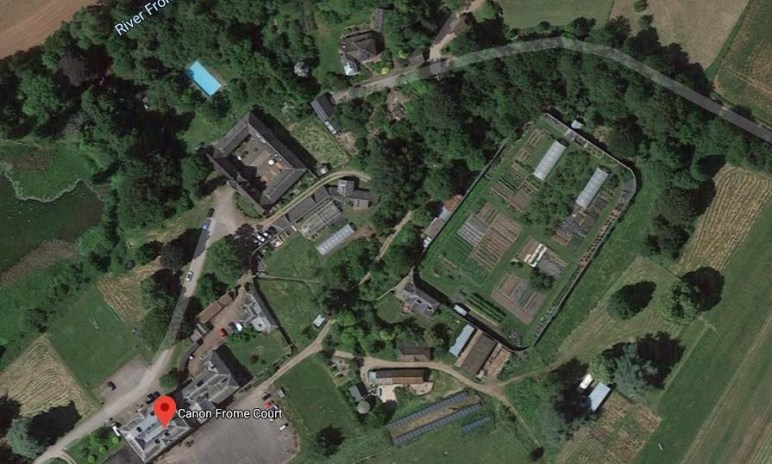
And for those interested in the ‘rural intentional community’ variety of wild community… Canon Frome Court (see image above) is hosting the UK Communities Conference this year – and also hosts Seeding Communities Weekends.
There are also some recent changes to the Wild Housing website related to intentional communities, which you are welcome to check out…
Updated page: Ideas for projects & communities (Cymru)
New page: Land-based livelihoods
Thanks for reading and have a great 2025!
This post is for informational purposes only. See our Disclaimer and Terms for more.

 Wildhousing