
On 21st February 2023, Cornwall Council voted to adopt its Climate Emergency development plan document, including a policy on One Planet Development.
In a nutshell, the policy supports “low impact residential development as part of a regenerative use of land”, subject to ten main criteria.
The Cornwall policy follows over ten years of land-based livelihoods being established under the pioneering One Planet Development (OPD) policy in Wales.
The plan
Back in 2019, Cornwall Council – like many other local authorities – declared a “climate emergency”. The council decided to prepare new planning policies.
In the words of Cornwall Council…
“The vision for the Development Plan Document has been to find ways to respond to the climate emergency by expanding the Local Plan approach and supporting the action needed to help Cornwall become carbon neutral by 2030”.
During 2020 and 2021, the council prepared and consulted on its Climate Emergency development plan document (‘the plan’ or ‘the DPD’ for short).
The policy
In our Planning policy review (South West England) in 2021, we noted that Cornwall’s draft climate plan included policy AL1, which supported “Regenerative and Low Impact Development (One Planet Development)”.
The Land magazine commented that Cornwall’s version of One Planet Development was
“….fairly similar to the Welsh OPD policy, but not as prescriptive in terms of achieving self-sufficiency (though that could come with supplementary planning guidance)”.
Subsequently, the plan – and policy AL1 – was considered by a planning inspector during 2022, including via a public examination. In January 2023, the inspector published his conclusions: the plan was “sound” subject to minor modifications.
The modifications
For policy AL1, the planning inspector required the council to remove its requirement for “self-sufficiency” – which the inspector felt went too far – and to replace it with “a sustainable lifestyle”.
Other changes to policy AL1 included: clearer reference to protecting heritage; a requirement that the land is returned to an acceptable use when the development ceases; and a requirement to avoid unacceptable impacts on neighbours.
Also a tenth criterion was added: after a temporary planning permission is granted for a six year period, the OPD smallholder/s must submit a monitoring report before the five year point, to show that their management plan has been achieved.
The adoption
Following the modifications being made, the climate plan went before Cornwall’s councillors at a meeting on 21st February.
This ‘rubber stamping’ process was not without incident. One councillor said that policy AL1 was effectively a “loophole” and that the council’s enforcement team would be “inundated” with people buying small plots of land and living in caravans.
Another councillor said the open countryside was “under threat” by policy AL1 and that more development was “not sustainable”. A couple of other councillors pressed for the planning and enforcement teams to be properly resourced.
Despite these concerns, the vote to adopt the climate plan was carried. The councillor proposing the plan described it as “trailblazing”.
So what’s next?
The climate plan and policy AL1 are now adopted as part of the development plan in Cornwall. For more details about what’s in the plan, and how to apply for planning permission, go to our page: One Planet Development (Cornwall)
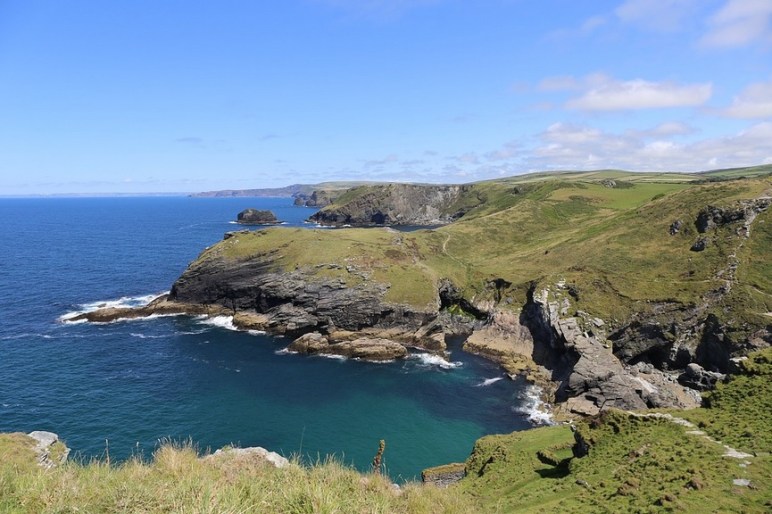
[Featured image: The Cornwall coast]
This post is for informational purposes only. See our Disclaimer and Terms for more.

 Wildhousing